

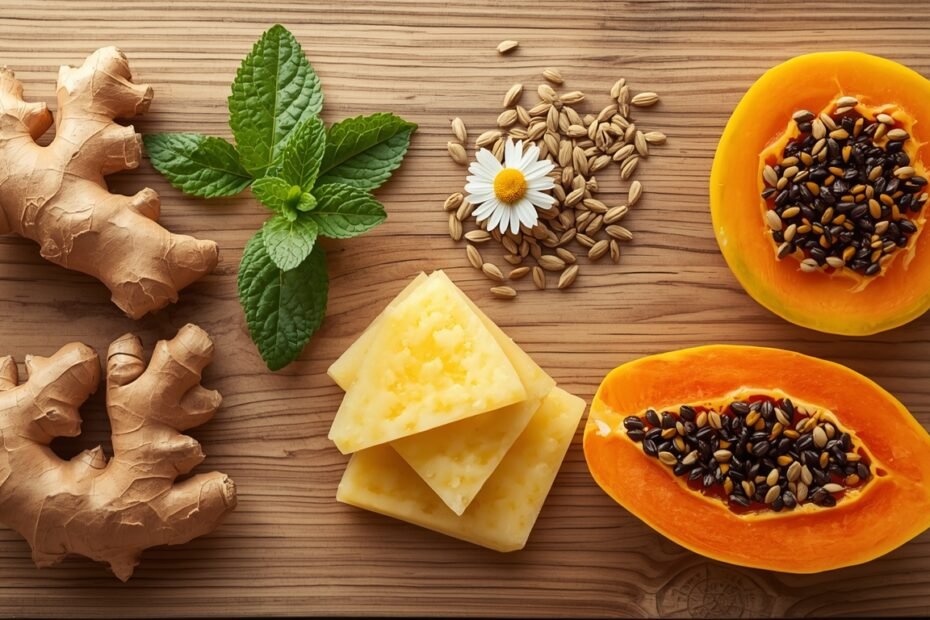
Digestive wellness has been a central concern across human cultures for thousands of years. Long before modern understanding of the digestive system, people observed that certain plants, roots, and fruits seemed to ease discomfort, support regularity, and contribute to an overall sense of well-being after meals. These observations, passed down through generations, form the foundation of traditional dietary practices that continue to inform natural wellness approaches today.
The ingredients explored in this article—ginger, peppermint, fennel, chamomile, papaya, and pineapple—have each earned a place in various cultural traditions not through marketing or modern invention, but through centuries of use and observation. Understanding their historical context and traditional applications offers insight into why they remain valued in contemporary wellness conversations, particularly among adults seeking gentle, time-tested approaches to digestive support.
This exploration is educational in nature. These ingredients are not presented as medical treatments or cures, but rather as elements of dietary and lifestyle traditions that have been associated with digestive comfort across diverse populations and time periods.
Why Digestive Wellness Matters More After 40
As we move through midlife, digestive function often becomes more noticeable. The body’s production of digestive enzymes may gradually decline, gut motility can slow, and sensitivity to certain foods may increase. Stress, medications, and lifestyle factors can further influence digestive comfort.
These changes aren’t unusual or necessarily problematic, but they do invite greater attention to how we support our digestive system. Many people in their forties, fifties, and beyond find themselves drawn to traditional approaches that work gently with the body rather than against it.
The ingredients discussed here have historically been incorporated into daily dietary practices—as teas, culinary additions, or simple preparations—rather than used as isolated interventions. This contextual use, woven into regular eating patterns, reflects a fundamentally different approach to wellness than the quick-fix mentality common in modern culture.
Ginger Root: A Warming Tradition Across Continents
Ginger root has been valued in traditional wellness systems for at least 5,000 years, with documented use in ancient Chinese, Indian, and Middle Eastern practices. Its distinctive warming quality and slightly spicy flavor made it both a culinary staple and a traditional remedy across multiple cultures.
In Traditional Chinese Medicine, ginger has been categorized as a warming herb, traditionally used to support what practitioners described as digestive “fire”—the body’s ability to break down and process food effectively. Indian Ayurvedic traditions similarly valued ginger for its heating properties, often incorporating it into daily chai preparations or as a component of digestive spice blends.
Historical texts suggest that ginger was traditionally consumed before or after meals to support comfortable digestion. It was also commonly prepared as a simple tea, sometimes combined with honey or lemon, and consumed throughout the day.
From a botanical perspective, ginger contains various compounds including gingerols and shogaols, which have been subjects of modern research interest. However, traditional use didn’t rely on understanding these specific constituents—it was based on observed effects over generations of use.
Many contemporary wellness practitioners note that ginger remains one of the most widely recognized traditional ingredients for digestive support, often recommended as a gentle option suitable for regular dietary inclusion. It can be consumed fresh, dried, as tea, or incorporated into cooking—a versatility that has contributed to its enduring popularity.
Peppermint Leaf: Ancient Refreshment With Purpose
Peppermint has been used medicinally and culinarily for thousands of years, with archaeological evidence suggesting its use in ancient Egypt and references appearing in Greek and Roman texts. The ancient Greeks and Romans valued peppermint both for its refreshing qualities and its traditional association with digestive comfort after large meals.
European folk medicine traditions often featured peppermint tea as an after-dinner beverage, a practice that continues in many cultures today. The herb’s cooling sensation and distinctive aroma made it a natural choice for soothing moments of digestive unease.
Peppermint contains menthol, the compound responsible for its characteristic cooling effect. Traditional herbalists, though unfamiliar with the specific chemistry, observed that peppermint preparations seemed to have a relaxing quality, particularly when consumed as a warm tea.
In contemporary wellness contexts, peppermint is often associated with supporting smooth digestive function. Many people find peppermint tea particularly helpful when consumed between meals or in the evening. The ritual of preparing and slowly sipping a warm cup of peppermint tea also contributes to the relaxation response, which itself may support digestive comfort.
It’s worth noting that peppermint has been so thoroughly integrated into various cultural practices that it barely registers as a “remedy” in many contexts—it’s simply a pleasant, traditional beverage with a long history of use.
Fennel Seeds: Mediterranean Wisdom in Tiny Packages
Fennel seeds have been used throughout Mediterranean, Middle Eastern, and Indian cultures for millennia. Ancient Egyptians, Greeks, and Romans all documented fennel’s use, and it appears in traditional Ayurvedic texts as a valued digestive support ingredient.
In many cultures, fennel seeds are traditionally consumed after meals—often simply chewed whole or prepared as a light tea. This practice remains common in India, where restaurants frequently offer fennel seeds (sometimes sugar-coated) as an after-dinner digestive aid and palate cleanser.
The seeds have a distinctive, slightly sweet licorice-like flavor that many find pleasant. Traditional use suggested that fennel supported comfortable digestion and helped maintain a sense of ease after eating.
Fennel has also been traditionally valued for its mild, gentle nature. Unlike some stronger herbs, fennel has historically been considered suitable for regular use across different age groups, contributing to its sustained presence in traditional dietary practices.
Modern interest in fennel often focuses on its aromatic compounds, though traditional use predates any scientific understanding of these constituents. People incorporated fennel into their diets based on generational knowledge and observed benefits, creating cultural practices that have endured for thousands of years.
Chamomile: Gentle Comfort From Ancient Gardens
Chamomile is perhaps best known as a calming bedtime tea, but its historical use extends well beyond sleep support. Ancient Egyptians dedicated chamomile to their sun god and used it in various traditional preparations. Greek physicians documented its use, and it appears throughout European folk medicine traditions.
While chamomile is often associated with relaxation and calm, it has also been traditionally valued for digestive support, particularly when digestive discomfort relates to stress or tension. The connection between emotional state and digestive function was recognized long before modern science confirmed the gut-brain axis, and chamomile’s gentle nature made it a natural choice for addressing both concerns simultaneously.
Chamomile tea preparation itself can be a calming ritual—the warm cup, the pleasant aroma, the deliberate pause to sit and sip. These contextual factors may contribute as much to its traditional value as the herb itself.
In traditional European practices, chamomile was often combined with other gentle herbs in digestive tea blends, reflecting an understanding that multiple ingredients might work together synergistically. This principle of combination, rather than reliance on single ingredients, characterized many traditional approaches to wellness.
Chamomile’s mild, slightly sweet flavor makes it accessible to most palates, and its gentle nature means it’s been traditionally considered safe for regular consumption, further supporting its role in everyday wellness practices rather than acute interventions.
Papaya: Tropical Tradition and Natural Enzymes
Papaya has been valued in tropical regions of Central and South America for centuries, with indigenous populations traditionally using both the fruit and other parts of the plant for various purposes. The fruit itself was consumed fresh, while other applications utilized the plant’s natural enzyme content.
Papaya contains papain, a proteolytic enzyme that assists in breaking down proteins. Traditional knowledge systems didn’t understand the biochemistry of enzymes, but practitioners observed that consuming papaya, particularly before it was fully ripe, seemed to support comfortable digestion, especially after protein-rich meals.
In traditional practices across Latin America and later in other tropical regions where papaya was introduced, the fruit was often consumed as part of meals rather than as a separate remedy. This integrated approach—incorporating digestive support directly into dietary patterns—reflects a fundamentally preventive rather than reactive mindset.
Some traditional preparations involved papaya leaves or unripe papaya, which contain higher concentrations of papain than the ripe fruit. However, the sweet, ripe fruit that most people enjoy today still contains these beneficial enzymes, albeit in lower concentrations.
Modern interest in digestive enzymes has brought renewed attention to papaya’s traditional role in digestive wellness. While contemporary enzyme supplements often isolate and concentrate these compounds, the traditional approach of simply including papaya in one’s regular diet represents a gentler, more holistic method.
Pineapple: More Than Just Sweet Refreshment
Pineapple, native to South America, was valued by indigenous populations long before European contact. Beyond its sweet flavor and refreshing qualities, traditional knowledge recognized that pineapple seemed to support comfortable digestion, particularly after substantial meals.
The active constituent that likely explains these traditional observations is bromelain, a group of proteolytic enzymes concentrated in pineapple stems but also present in the fruit itself. Like papain in papaya, bromelain assists in protein breakdown, potentially supporting the digestive process.
In traditional Caribbean and South American dietary practices, pineapple was often included in meals that featured proteins, or consumed shortly after eating. This wasn’t based on scientific understanding of enzymes, but on generations of observation about what foods seemed to work well together.
Fresh pineapple contains active bromelain, though cooking and processing can reduce enzyme activity. This distinction matters in understanding why traditional use emphasized fresh fruit rather than processed or cooked preparations when digestive support was the goal.
Contemporary wellness approaches often highlight pineapple’s enzyme content, sometimes isolating bromelain for concentrated supplementation. However, consuming fresh pineapple as part of a varied diet represents the traditional approach—one that includes the enzyme alongside fiber, vitamins, minerals, and other beneficial compounds found in whole fruit.
Cultural Patterns in Traditional Digestive Wellness
Looking across these various ingredients, several common themes emerge from traditional practices around the world. First, most traditions emphasized regular, preventive use rather than waiting for discomfort to arise. Ingredients like ginger, fennel, and chamomile were often incorporated into daily dietary routines—in teas, as culinary additions, or as after-meal rituals.
Second, traditional approaches rarely relied on single ingredients in isolation. Digestive tea blends, spice combinations, and meal compositions reflected an intuitive understanding that multiple elements working together might be more effective than any one ingredient alone.
Third, timing mattered in traditional practices. Some ingredients were consumed before meals to prepare the digestive system, others during meals as part of the food itself, and still others after meals to support comfortable digestion. This attention to context and timing suggests sophisticated observation of how different approaches produced different results.
Fourth, traditional wellness systems viewed digestive health within a larger framework of overall well-being. Digestive support wasn’t isolated from considerations of stress, sleep, movement, and emotional balance—it was understood as interconnected with these other aspects of life.
Esses padrões oferecem insights sobre como podemos incorporar ingredientes tradicionais de forma consciente às práticas de bem-estar contemporâneas.Em vez de buscar soluções rápidas ou intervenções drásticas, as abordagens tradicionais sugerem que a inclusão suave e consistente de ingredientes consagrados pelo tempo, combinada com a atenção ao estilo de vida como um todo, oferece o caminho mais sustentável para o conforto digestivo.
Para aqueles interessados em como esses ingredientes tradicionais se encaixam em rotinas de bem-estar mais amplas, explorar rotinas simples para energia e vitalidade diárias pode fornecer um contexto útil sobre como integrar diversas práticas de apoio à vida cotidiana.
Practical Considerations for Modern Use
While these ingredients have long histories of traditional use, individual responses can vary. Some people find certain herbs or foods particularly supportive, while others may not notice significant effects. This variability is normal and reflects the personal nature of wellness.
Quality and preparation methods matter. Fresh ginger will differ from dried ginger powder, just as fresh pineapple contains active enzymes that processed juice may not. Traditional preparations typically used whole or minimally processed ingredients, a principle worth considering in contemporary applications.
O momento do consumo também pode influenciar a experiência. Práticas tradicionais frequentemente sugeriam horários específicos — funcho após as refeições, gengibre antes ou junto com a comida, camomila à noite. Embora essas orientações tenham surgido da observação e não de estudos controlados, elas representam sabedoria acumulada que pode ter valor prático.
It’s also important to recognize that while these ingredients have been traditionally used to support digestive wellness, they’re not replacements for addressing underlying health concerns with appropriate medical care. Persistent digestive issues warrant professional evaluation rather than self-management with dietary ingredients alone.
A Broader Perspective on Natural Ingredients
The ingredients explored here represent just a small portion of the vast botanical knowledge that human cultures have accumulated over millennia. Every region of the world has developed traditions around local plants and foods that support various aspects of wellness.
What makes these particular ingredients noteworthy is their consistent appearance across multiple, geographically distinct cultural traditions. When diverse populations independently observe similar benefits from the same plants, it suggests something meaningful, even if traditional knowledge systems couldn’t explain the mechanisms in modern scientific terms.
Contemporary research continues to explore why traditional ingredients may produce the effects that generations of users have observed. While scientific understanding adds valuable context, it’s worth remembering that these ingredients earned their place in traditional practices through simple observation and use—they worked for people, and that practical effectiveness ensured their continued use across centuries.
Para aqueles que buscam abordagens estruturadas que combinem diversos ingredientes tradicionais, existem vários recursos que explicam como esses elementos podem funcionar juntos. Alguns leitores optam por explorar formulações que combinam vários desses ingredientes tradicionais de forma estruturada. Um exemplo informativo pode ser encontrado aqui, embora a exploração individual de alimentos integrais e preparações com um único ingrediente represente a abordagem mais tradicional.
Closing Thoughts: Tradition, Observation, and Personal Discovery
The traditional ingredients discussed in this article—ginger, peppermint, fennel, chamomile, papaya, and pineapple—have earned their place in wellness conversations through sustained use across time and cultures. They represent approaches to digestive support that are gentle, accessible, and rooted in generations of human experience.
Understanding their historical context enriches our appreciation for how human communities have observed, experimented with, and passed down knowledge about the natural world’s resources. These traditions weren’t created by marketing departments or driven by commercial interests—they emerged organically from people paying attention to what supported their well-being and sharing that knowledge with others.
In our contemporary context, with access to both traditional wisdom and modern scientific understanding, we have the opportunity to engage with these ingredients thoughtfully. Whether incorporating ginger into cooking, enjoying peppermint tea after dinner, adding fresh pineapple to meals, or exploring traditional herbal preparations, the key is approaching these practices with curiosity, patience, and attention to your own experience.
Digestive wellness, like all aspects of health, is deeply personal. What supports one person beautifully may not resonate with another. The invitation is to explore, observe, and discover what traditional ingredients and practices genuinely serve your unique body and circumstances.
These time-tested ingredients offer a starting point for that exploration—not as guaranteed solutions, but as gentle options that have supported human wellness for countless generations. In that continuity of tradition and observation, there’s both wisdom and invitation to participate in your own discovery of what natural approaches might support your well-being.