

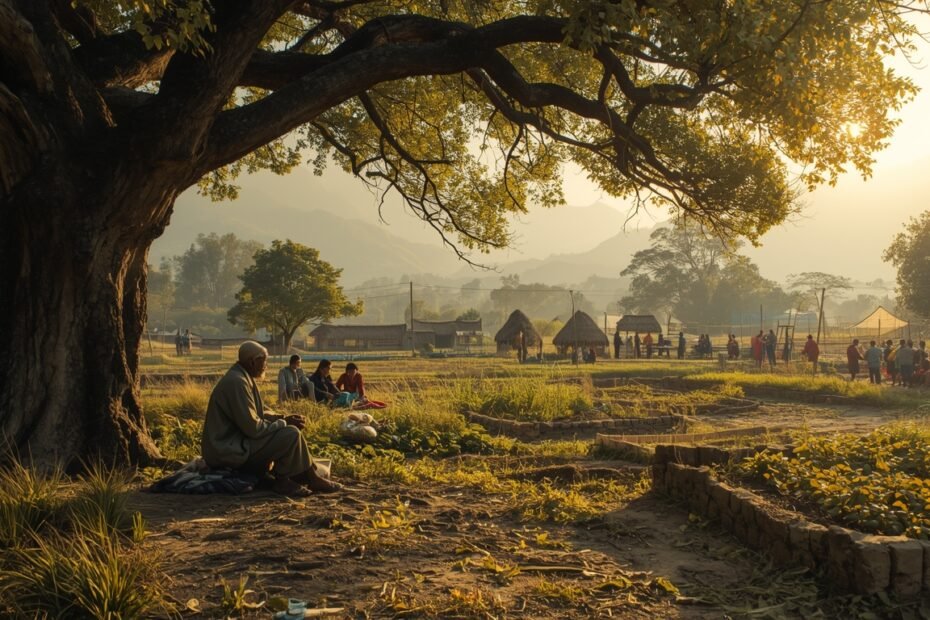
Long before laboratories, clinical trials, or medical degrees, human communities around the world developed sophisticated understandings of health and well-being. These weren’t systems built on scientific methodology or technological advancement—they emerged from careful observation, accumulated experience, and knowledge passed down through countless generations.
What’s remarkable isn’t just that these traditional approaches existed, but that many of them endured for thousands of years across vastly different cultures and environments. From the Mediterranean to the Himalayas, from indigenous communities in the Americas to island populations in the Pacific, patterns of health support emerged that share surprising commonalities despite geographical and cultural separation.
This article explores how traditional cultures approached health through observation rather than explanation, through lifestyle patterns rather than interventions, and through integration with natural rhythms rather than attempts to override them. Understanding these historical perspectives offers insight not because they were perfect or should be replicated exactly, but because they reveal fundamental principles about human well-being that remain relevant today.
The Foundation: Observation Across Generations
Traditional health knowledge didn’t emerge from theoretical frameworks or controlled experiments. It developed through a process that was simultaneously simple and profound—people paid attention to what happened when they did certain things, and they remembered.
If consuming a particular plant seemed to ease digestive discomfort, that observation was noted and shared. If people who maintained certain habits appeared to remain healthy and vital longer, those patterns were passed along. If seasonal changes seemed to require adjustments in diet or activity, those rhythms were incorporated into cultural practices.
This accumulated knowledge wasn’t written in textbooks or formalized into systems immediately. For most of human history, it lived in oral tradition, practical demonstration, and cultural customs that people learned simply by participating in community life. The elderly taught the young, not through lectures but through shared activity and storytelling.
What gave this knowledge validity wasn’t peer review or scientific confirmation—it was the test of time and repeated observation. Practices that consistently appeared to support health across many individuals and multiple generations earned their place in traditional wisdom. Those that didn’t work or that caused harm were eventually discarded or modified.
This process of observation wasn’t perfect, and traditional cultures certainly held beliefs that modern understanding has shown to be inaccurate. However, the core methodology—careful attention to patterns and outcomes over long periods—produced genuine insights about health that scientific research continues to validate today.
The key difference was timescale. Traditional knowledge accumulated over centuries or millennia, with countless individuals contributing observations. This allowed for detection of subtle patterns and long-term effects that short-term studies might miss.
Living by the Sun: Daily Rhythms and Natural Cycles
Perhaps the most fundamental aspect of traditional health practices was alignment with natural rhythms, particularly the cycle of day and night. Before artificial lighting, human activity necessarily followed the sun—people rose with dawn and settled as darkness fell.
This wasn’t merely practical necessity; it created a powerful synchronization between human biology and the natural environment. Sleep occurred during the hours when the body’s repair and restoration processes function most effectively. Activity aligned with periods when energy and alertness naturally peak.
Traditional cultures around the world structured daily life around these rhythms. Morning hours were often devoted to more demanding physical tasks when energy was fresh. Midday, particularly in warmer climates, might include rest periods—the siesta tradition found across Mediterranean and Latin American cultures wasn’t laziness but recognition that intense midday heat makes certain activities counterproductive.
Evening transitions were gradual rather than abrupt. As daylight faded, activities naturally shifted toward quieter pursuits—food preparation, storytelling, craft work that could be done by firelight. This gentle winding down prepared the body for sleep in ways that sudden transitions from bright lights and stimulation cannot.
Seasonal rhythms also shaped traditional life profoundly. Agricultural societies necessarily adapted to seasonal cycles, but this went beyond farming schedules. Diet changed with what was locally available in each season. Activity levels often varied—winter in cold climates meant different patterns than summer. Even social gatherings and celebrations aligned with seasonal transitions, creating cultural markers that helped communities move through the year together.
This seasonal adaptation wasn’t arbitrary. It reflected observation that human needs and optimal activities shift with environmental conditions. The body’s requirements change with temperature, daylight exposure, and available food sources. Traditional practices honored these shifts rather than attempting to maintain identical patterns year-round.
Modern life has largely divorced us from these natural rhythms. We maintain the same schedule regardless of season, expose ourselves to bright light at all hours, and expect consistent energy and productivity daily. Traditional patterns suggest there might be wisdom in allowing more natural variation.
Food as Foundation: Traditional Dietary Wisdom
Every traditional culture developed distinctive dietary patterns based on what their environment provided. Yet across this diversity, common principles emerge that reveal shared understanding about how food relates to health.
First, traditional diets were built on whole, minimally processed foods because, quite simply, those were the only options available. Grains were consumed whole, not refined. Vegetables and fruits were eaten fresh or preserved through simple methods like drying or fermenting. Proteins came from recognizable sources—whole fish, intact cuts of meat, eggs, legumes.
This wasn’t a philosophical choice but a practical reality. However, it meant that traditional diets automatically included fiber, nutrients, and beneficial compounds that processing removes. People consumed food in forms that human digestion had adapted to handle over millennia.
Second, traditional food cultures emphasized variety within their available options. Mediterranean diets featured diverse vegetables, multiple grain types, various legumes, herbs, and different protein sources. Asian traditions combined numerous plant foods, fermented products, and varied preparations. Indigenous American diets incorporated diverse local plants, game, and foraged foods.
This variety wasn’t just for culinary interest—it ensured exposure to a broad spectrum of nutrients and reduced over-reliance on any single food source. When one crop failed or one food became scarce, alternatives existed.
Third, many traditional cultures valued both feast and restraint. Celebratory occasions featured abundant food, but daily eating was often modest, particularly outside harvest seasons. Intermittent abundance and scarcity created natural variations in intake that some researchers now suggest may have health implications.
Food preparation methods also reflected accumulated wisdom. Fermentation, used across virtually every traditional culture, made foods more digestible and created beneficial compounds. Soaking grains and legumes before cooking, a practice in many traditions, reduced substances that can interfere with nutrient absorption. Combining certain foods—like grains with legumes—created more complete nutrition than either provided alone.
Traditional cultures also recognized that food affects more than physical hunger. Meals were social events that strengthened community bonds. Food preparation involved skill and care that gave people meaningful roles. Seasonal and ceremonial foods marked time and created shared cultural identity.
The relationship to food in traditional settings was fundamentally different from modern eating—less convenience-focused, more integrated with daily life, and deeply connected to place, season, and community.
Movement Woven Into Daily Life
Traditional cultures didn’t “exercise” in the contemporary sense—they moved constantly as an inherent part of living. Transportation meant walking or, for longer distances, perhaps riding animals. Food procurement required physical effort. Construction, maintenance, food preparation, and virtually all other activities involved bodily engagement.
This constant, varied movement throughout the day created fitness almost as a side effect of existence. People developed strength, endurance, and flexibility not through structured workouts but through the diverse physical demands of daily life.
The movements involved were natural and functional—bending, lifting, carrying, walking over uneven terrain, reaching, squatting, climbing. These patterns engaged the body completely and in ways that promoted overall capability rather than isolated muscle development.
Importantly, this movement was generally moderate in intensity but high in volume. Few traditional activities required maximal exertion, but few allowed for prolonged complete stillness. People moved throughout the day at sustainable paces, accumulating substantial physical activity without the intensity that modern exercise often emphasizes.
Traditional cultures also maintained physical competence across the lifespan. Because movement was necessary for daily function, people continued moving even in older age. This ongoing activity, adjusted as needed for changing capabilities, maintained function far better than the pattern of intense activity in youth followed by near-complete sedentarism in later years.
Certain cultures developed specific movement practices—martial arts in Asian traditions, dance in many African and indigenous cultures, yoga in India. These practices often combined physical development with spiritual or communal dimensions, reflecting an integrated view of human well-being that didn’t separate body from mind or individual from community.
The terrain of traditional life also mattered. Walking on varied, natural surfaces—soil, grass, sand, stone—required constant adjustment and engaged stabilizing muscles differently than flat, uniform modern surfaces. Barefoot or minimally shod walking created different foot mechanics than contemporary footwear.
While we can’t recreate traditional movement patterns entirely in modern contexts, the underlying principle remains relevant: frequent, varied, moderate movement integrated into daily life, sustained across the lifespan, may support overall health and vitality more effectively than brief periods of intense exercise separated from otherwise sedentary days.
Plants, Herbs, and Nature’s Pharmacy
Traditional cultures developed extensive knowledge about plants—not just which ones provided food, but which ones seemed to support various aspects of health and well-being. This botanical wisdom was highly sophisticated, distinguishing between similar-looking species, understanding which plant parts to use, recognizing optimal harvesting times, and knowing appropriate preparation methods.
This knowledge came entirely from observation and careful experimentation across generations. Someone, at some point, tried using different plants for different purposes and noticed effects. Those observations were shared, tested by others, refined, and eventually became established traditional knowledge.
Different cultures identified plants that seemed to support digestion, ease discomfort, promote sleep, provide energy, or address various common health concerns. Remarkably, some plants were valued for similar purposes across widely separated cultures, suggesting these observations reflected genuine properties rather than random belief.
The use of herbs and plants in traditional cultures was typically preventive and integrated into daily life rather than reserved for addressing acute problems. Herbs might be included in regular cooking, consumed as teas, or incorporated into everyday preparations. This daily inclusion of botanical elements was simply how people ate and lived.
Traditional herbalists—elders with accumulated knowledge about local plants—held respected positions in communities. Their knowledge encompassed not just which plants to use, but in what combinations, preparations, and contexts. This was sophisticated understanding developed through extensive experience, even though it lacked scientific terminology or explanation.
It’s important to note that traditional plant use wasn’t always safe or effective by modern standards. Some traditional remedies were indeed harmful, and many lacked significant effect beyond placebo. However, the plants and preparations that endured in traditional use over very long periods often did so because they produced observable benefits without unacceptable risks.
The relationship between traditional cultures and plants also reflected different ways of understanding nature. Plants weren’t seen primarily as resources to extract value from, but as partners in an interconnected living system. Sustainable harvesting practices in many traditions ensured plant populations remained healthy—not from ecological science, but from practical understanding that depleting resources undermined long-term well-being.
The Mind-Body-Spirit Integration
Traditional cultures generally didn’t separate mental, physical, and spiritual health the way modern Western medicine has. Well-being was understood holistically—the state of one’s mind affected physical health, physical conditions influenced emotional state, and spiritual practice was seen as integral to both.
This integration manifested in various ways across cultures. Meditation practices in Asian traditions explicitly linked mental discipline with physical and spiritual benefits. Indigenous healing ceremonies combined physical treatments with ritual and community involvement. Traditional Chinese Medicine conceptualized health through integrated systems where physical symptoms reflected underlying imbalances that involved mental and spiritual dimensions.
The connection between emotional state and physical health was observed long before modern research on stress, psychoneuroimmunology, or the gut-brain axis. Traditional healers recognized that grief, anger, worry, or fear could manifest as physical symptoms. Recovery from illness was understood to require not just physical treatment but attention to mental and emotional balance as well.
Many traditional practices addressed multiple dimensions simultaneously. Yoga combines physical postures with breath control and meditation. Tai chi integrated gentle movement with mental focus and philosophical principles. Traditional ceremonies created experiences that engaged body, mind, emotion, and spiritual meaning in unified experiences.
This holistic approach also extended to understanding health challenges. Rather than viewing symptoms as isolated problems requiring targeted fixes, traditional perspectives often sought underlying patterns or imbalances affecting the whole person. Treatment aimed at restoring overall balance rather than simply eliminating specific symptoms.
The integration of mental and emotional balance into overall conceptions of health reflected daily observation that these dimensions of human experience profoundly influence each other. People whose emotional lives were troubled often experienced physical symptoms. Those who maintained practices supporting mental clarity and emotional equilibrium seemed to enjoy better overall health.
Community, Connection, and Collective Well-Being
Perhaps no aspect of traditional health support is more different from modern approaches than the role of community and social connection. Traditional life was fundamentally communal—people lived in extended family groups, worked cooperatively, celebrated together, supported each other through difficulties, and shared daily life in ways that created deep interdependence.
This wasn’t romanticized harmony—traditional communities certainly experienced conflict, inequality, and various problems. However, the basic structure of life created social connections that appear to have supported health in multiple ways.
Elders remained integrated into community life rather than isolated. Their wisdom, stories, and continued presence provided continuity and guidance. Caring for elders was a family and community responsibility, creating meaning for both caregivers and cared-for.
Children grew up surrounded by extended family and community members, with care and teaching distributed across many adults. This broader network of relationships provided security, diverse role models, and integration into cultural knowledge.
Daily life included substantial social interaction as a natural byproduct of shared work and celebration. Food preparation, agricultural work, craft production, and other activities often involved multiple people working together. This combined productivity with social connection in ways that made both more satisfying.
Ritual and celebration provided regular occasions for community gathering. These weren’t optional social events but central cultural practices that everyone participated in. They created shared meaning, reinforced bonds, marked life transitions, and gave people a sense of belonging to something larger than themselves.
The health implications of this community structure are increasingly recognized. Social isolation is now understood to affect health as significantly as many physical risk factors. Conversely, strong social connections and sense of community belonging are associated with better health outcomes across numerous measures.
Traditional communities also provided practical support during illness or difficulty. Care for the sick, help during recovery, sharing of resources during hardship—these weren’t formal systems but cultural expectations that ensured people didn’t face challenges alone.
The loss of these community structures in modern life represents a significant departure from conditions under which human health evolved. While we can’t simply recreate traditional communities, recognizing their role in supporting well-being suggests that rebuilding connection and community deserves attention as a health-supporting practice.
Learning From Nature: Seasonal Wisdom and Environmental Awareness
Traditional cultures maintained intimate knowledge of their natural environments developed through constant observation and necessity. This wasn’t academic knowledge but practical understanding essential for survival and well-being.
People knew which plants were edible, which had other uses, and when each was best harvested. They understood animal behavior patterns, weather signs, water sources, and countless other environmental details. This knowledge connected them to place in ways that modern life rarely requires or cultivates.
This environmental awareness influenced health practices in multiple ways. Seasonal changes prompted adjustments in diet, activity, and daily routines. Many traditions recognized that different seasons called for different foods, different pacing, even different emotional and social patterns.
Traditional environmental knowledge also fostered sustainability almost by necessity. Resources had to be managed to remain available year after year. Overharvesting, pollution, or environmental degradation directly affected community well-being in visible, immediate ways. This created incentives for practices that maintained environmental health.
The relationship with nature in traditional cultures was participatory rather than extractive. People saw themselves as part of natural systems, dependent on and responsible for maintaining balance within those systems. This perspective shaped not just resource use but fundamental worldviews about human place in the larger living world.
Many traditional cultures also maintained spiritual or sacred relationships with natural places and elements. Certain locations, plants, animals, or natural features held special significance. This sacred dimension reinforced protective behaviors and maintained connections to nature that went beyond mere utility.
Time spent outdoors was simply inherent to traditional life—there was no distinction between “nature time” and regular existence. Work, social activity, and daily routines occurred primarily outside or in structures open to natural elements. This constant exposure to natural light, fresh air, and natural environments created conditions quite different from climate-controlled indoor living.
Traditional observation also recognized patterns we’re only recently rediscovering scientifically. The connection between light exposure and sleep patterns, the influence of natural settings on stress levels, the importance of exposure to diverse microorganisms from natural environments—these weren’t understood mechanistically, but they were observed as patterns that influenced well-being.
Simplicity, Restraint, and Sustainable Living
Traditional lifestyles, by modern standards, were materially simple. People owned fewer possessions, lived in smaller spaces, and had fewer choices in most aspects of life. While this was partly due to limited resources and technology, it also reflected cultural values that emphasized sufficiency over abundance.
This material simplicity had implications for well-being. Fewer possessions meant less complexity, less maintenance burden, less time devoted to acquiring and managing things. Life’s focus could center on relationships, meaningful work, skill development, and community participation rather than consumption and accumulation.
Traditional cultures generally valued quality over quantity—well-made tools that lasted generations, carefully prepared food, skilled craftsmanship in necessary items. This created different relationships with objects and work than disposable consumption culture fosters.
Resource restraint was also necessary and therefore normative. Food, materials, and goods were used carefully, with waste minimized through creative reuse. This wasn’t noble environmentalism but practical necessity that created habits of conservation and appreciation for what was available.
Work patterns in traditional cultures, while physically demanding, often included substantial rest periods, seasonal variation, and integration of work with social interaction. The separation between “work time” and “personal time” that characterizes modern employment didn’t exist—activities flowed together more organically.
This slower pace of life, with less stimulation and fewer rapid changes, created different cognitive and emotional conditions than contemporary experience. People had more time for contemplation, for careful observation, for development of skills that required patience and attention.
Traditional craftsmanship exemplified this—creating beautiful, functional objects required years of practice and patient attention to detail. This kind of focused engagement in meaningful work appears to support well-being in ways that rushed, fragmented modern work often doesn’t.
The relationship between simplicity and well-being observed in long-lived traditional cultures suggests that beyond a certain threshold, material abundance may not enhance and might even diminish quality of life. While few would choose genuine hardship, the traditional emphasis on sufficiency rather than excess reflects wisdom that modern consumer culture often obscures.
What Traditional Knowledge Teaches Us Today
Examining how traditional cultures supported health reveals several overarching principles that remain relevant regardless of technological or scientific advancement.
First, health emerges from integrated lifestyle patterns rather than isolated interventions. Traditional cultures didn’t separate “health behaviors” from regular life—the way people ate, moved, connected, and lived daily created conditions that supported well-being. This holistic integration contrasts sharply with modern approaches that often focus on specific behaviors or treatments while leaving overall lifestyle unchanged.
Second, alignment with natural rhythms—daily, seasonal, and across the lifespan—appears fundamental to well-being. Traditional life maintained this alignment by necessity, while modern life actively disrupts it through artificial lighting, climate control, year-round food availability, and expectation of consistent activity regardless of natural cycles.
Third, community connection and meaningful social roles contribute significantly to health. Traditional structures ensured people remained embedded in networks of relationship and contribution throughout life. Modern isolation and fragmentation represent significant departures from conditions under which human health evolved.
Fourth, preventive, ongoing attention to well-being proves more effective than reactive crisis management. Traditional practices emphasized daily habits, seasonal adjustments, and lifestyle patterns that maintained health rather than waiting for problems to develop and then seeking solutions.
Fifth, observation and experience accumulated over long periods reveals patterns that short-term studies or individual experience might miss. Traditional knowledge developed slowly but reflected testing across many individuals and generations.
These principles don’t require rejecting modern knowledge or technology. Rather, they suggest that some fundamental aspects of human well-being remain constant despite technological change, and that traditional approaches offer insights about supporting health that remain valuable today.
Reflections on Wisdom and Time
Traditional health knowledge developed without scientific explanation, without controlled trials, without peer-reviewed research. It emerged from careful observation, accumulated experience, and intergenerational sharing of what seemed to support well-being across long periods and many lives.
This doesn’t make traditional knowledge superior to modern science—scientific methodology has revealed mechanisms, corrected errors, and enabled interventions traditional cultures couldn’t imagine. However, it suggests that practical wisdom about health can develop through attention and observation, and that very long timescales reveal patterns that shorter-term research might miss.
What traditional cultures understood intuitively, modern research increasingly confirms: human health depends on alignment between our biological nature and the conditions of our lives. When lifestyle, environment, and daily patterns support our fundamental needs as living beings, health tends to follow. When those conditions diverge significantly from what we’re adapted for, challenges arise.
Traditional knowledge also reminds us that health involves far more than just physical body maintenance. The integration of mental, emotional, social, spiritual, and physical dimensions that characterized traditional approaches reflects deep understanding of human nature—understanding that came not from reductionist analysis but from observing whole people living complete lives.
The traditional emphasis on gradual, consistent practices rather than dramatic interventions, on prevention rather than crisis response, on integration rather than isolation, and on sustainability rather than short-term optimization offers perspectives that complement modern medical understanding and may help address limitations of contemporary approaches.
We cannot and should not attempt to recreate traditional lifestyles wholesale—modern life offers genuine benefits, and romanticizing the past ignores real hardships traditional peoples faced. However, we can learn from principles that supported health across diverse cultures and long periods, adapting them thoughtfully to contemporary contexts.
The wisdom embedded in traditional health practices isn’t that they provide magical solutions or that ancient people knew secrets we’ve forgotten. Rather, it’s that fundamental aspects of human well-being remain constant across time, and that careful attention to how we actually live—day by day, throughout the lifespan—matters more than any single intervention or discovery.
Traditional cultures remind us that supporting health is less about finding the right product, program, or technique and more about creating conditions—in daily rhythms, relationships, movement, food, environment, and purpose—that allow the inherent human capacity for well-being to express itself naturally.